





Old-Fashioned Dry Fire vs “Dry Fire 2026”
1) What “Old-Fashioned Dry Fire” Means
Old-fashioned dry fire is the classic approach: unloaded firearm, safe backstop, front sight focus, slow trigger press, often with a paper target and a shot timer (or no timer).
Strengths
-
Builds trigger control, sight alignment, and drawstroke mechanics
-
Cheap and simple
-
Highly effective for fundamentals (when done correctly)
The built-in limitation
-
Most firearms do not allow realistic follow-up shots without manual cycling. That’s where “Dry Fire 2026” changes the game.
2) What “Dry Fire 2026” Adds
Modern dry fire systems focus on three upgrades:
A) Trigger Reset (continuous shots)
-
AR-15: Mantis Blackbeard / BlackbeardX auto-resets the trigger/hammer, enabling rapid repeated trigger presses (Mantis states up to ~10 shots/sec).
-
Pistol: SIRT training pistols are designed around a resetting trigger concept for repeated reps without racking a slide.
B) Recoil / Cycling (more realism)
-
iMarksman Training Pistol is a Laser RECOIL Pistol, Airsoft IR Laser Training Pistol
C) Objective scoring (hit confirmation + data)
-
This is where laser targets and reactive targets shine - especially systems that record time + placement rather than “just click.”
3) The Most Practical Comparison
Old-Fashioned Dry Fire vs Dry Fire 2026 (Real Outcomes)
| Capability | Old-Fashioned Dry Fire | Dry Fire 2026 |
|---|---|---|
| Fundamentals (press, sights, draw) | Excellent | Excellent |
| Follow-up shot cadence | Limited (manual cycling) | Strong (trigger reset / cycling) |
| Measurable hit confirmation | Often none | Laser scoring + reactive feedback |
| Action-steel style arrays | Hard to validate | Practical and repeatable |
| Engagement under time pressure | Possible (shot timer) | Better (timer + scoring + reset) |
| “Fun factor” consistency | Variable | Higher - more reps, less interruption |
4) Product Categories That Define “Dry Fire 2026”
Below are the main modern categories, with examples shooters actually buy.
1) Laser Target Systems (scored hits + drills)
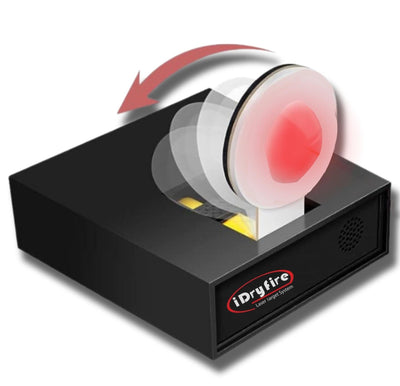
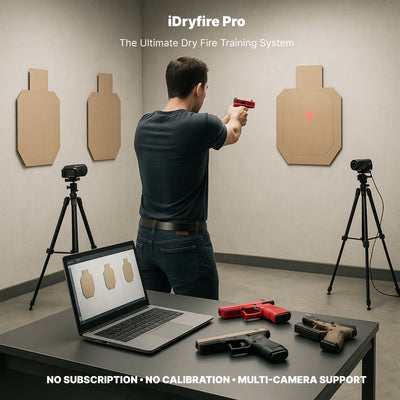
iDryfire Target System + iDryfire Reactive Targets
-
Best fit when you want repeatable, scored practice with clear hit feedback and structured sessions (home, instructor-led, or agency-style repetitions).
-
The key advantage over paper-only dry fire is objective confirmation: you can run drills and validate improvement rather than “guess.”
2) Sensor Analytics (movement/trigger diagnostics)
Mantis X series (and similar sensor trainers)
-
Best fit when your priority is diagnosing pre-shot movement, trigger press disruption, and consistency trends (sensor-based approach).
-
Complements laser targets well, because it answers why you missed rather than only where you hit.
3) Trigger Reset Trainers (continuous reps)
AR-15: Mantis Blackbeard / BlackbeardX
-
Purpose-built for AR dry fire with automatic trigger reset so you can train cadence and transitions realistically.
Pistol: SIRT
-
Dedicated training pistols built around the Shot Indicating Resetting Trigger concept.
4) Recoil / Cycling Systems (realistic slide movement)
CoolFire Trainer
-
CO₂-driven system intended to add cycling/recoil realism while using your firearm’s sights and ergonomics.
5) Which Approach Should a Shooter Choose?
Choose Old-Fashioned Dry Fire if:
-
You’re building fundamentals from scratch
-
Your training space is minimal
-
You want the cheapest “daily reps” plan
Choose Dry Fire 2026 if you want:
-
Measurable accuracy (hit confirmation, scoring)
-
Repeatable timed drills that actually feel like strings of fire
-
More realistic multi-target work
-
Less interruption (trigger reset / cycling)
Best practice in 2026 is usually hybrid:
-
Fundamentals (old-school) + scoring targets (laser/reactive) + one realism enhancer (reset or recoil).
| Old-Fashioned Dry Fire | Dry Fire 2026 |
|---|---|
| Click → dead trigger | Trigger reset or cycling enables realistic shot strings |
| Manual rack (slide/charging handle) to reset | Laser target scoring + reactive feedback confirms hits |
| No hit confirmation (often) | Timed drills with objective results (time + accuracy) |
| Great fundamentals, limited realism | Better transfer to real cadence and transitions |
Leave a comment